

Page Last Updated on 2026-09-03
Why can’t I use blood pressure categories that are based on my age?
After receiving several feedback inquiries with this question, we decided to publish this help document with regard to our company’s response to the subject of age-based blood pressure categories.
The BPTrakr Blood Pressure Category Chart, shown below, is located on the Blood Pressure Reading screen of the app, and is also displayed as an available option on the BPTrakr Report.
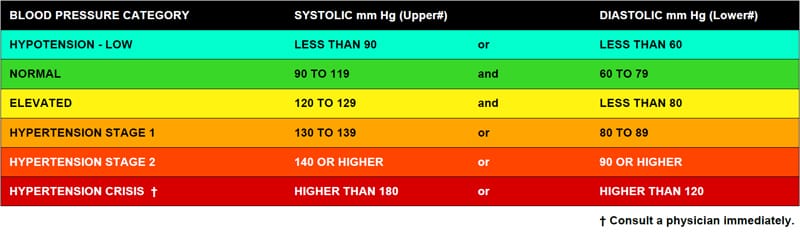
The BPTrakr Blood Pressure Category Chart was created based on data contained in the following two documents by the American Heart Association:
- Understanding Blood Pressure Readings on the American Heart Association.
-
Low Blood Pressure on the American Heart Association.
BPTrakr does not use age-based blood pressure categories because we have not identified an authoritative medical guideline that provides a standardized set of blood pressure categories based solely on a person’s age.
There is, however, considerable debate within the medical community about blood pressure targets and the role age should play in determining them.
For a discussion of this issue, see the following commentary published in the American Heart Association journal Circulation:
The commentary, written by cardiovascular physicians, discusses concerns surrounding blood pressure targets and age and illustrates why an individual’s appropriate blood pressure target can be more complicated than a single category.
Why does the American Heart Association use lower thresholds?
The American Heart Association uses relatively low blood pressure thresholds to encourage earlier recognition and intervention aimed at reducing cardiovascular risk. Under the current AHA/ACC guidelines, a systolic blood pressure of 120–129 mm Hg with a diastolic pressure below 80 mm Hg is classified as Elevated, while hypertension begins at 130/80 mm Hg.
Other medical organizations use different definitions and thresholds. For example, the World Health Organization (WHO) defines clinical hypertension in adults as systolic blood pressure of 140 mm Hg or higher and/or diastolic blood pressure of 90 mm Hg or higher, based on measurements taken on two different days.
These differences help illustrate why the category displayed by BPTrakr should be viewed as a standardized reference based on AHA guidelines—not as an individualized assessment of what blood pressure is appropriate for a particular person.
Important: The blood pressure category displayed by BPTrakr is for informational purposes and is not a medical diagnosis. Only a physician or other qualified healthcare professional can determine what blood pressure range is appropriate for you and confirm a blood pressure-related diagnosis.
How to hide the Blood Pressure Category column on the Data Table in BPTrakr Reports
When printing a BPTrakr Blood Pressure Report for your medical provider, there is an available option to hide the blood pressure category column on the data table in the report. See How to hide the Blood Pressure Category column on the Data Table in BPTrakr Reports for step-by-step instructions.
See also
- Learn about Blood Pressure Categories
- Learn about Pulse Pressure (PP)
- Learn about Mean Arterial Pressure (MAP)