
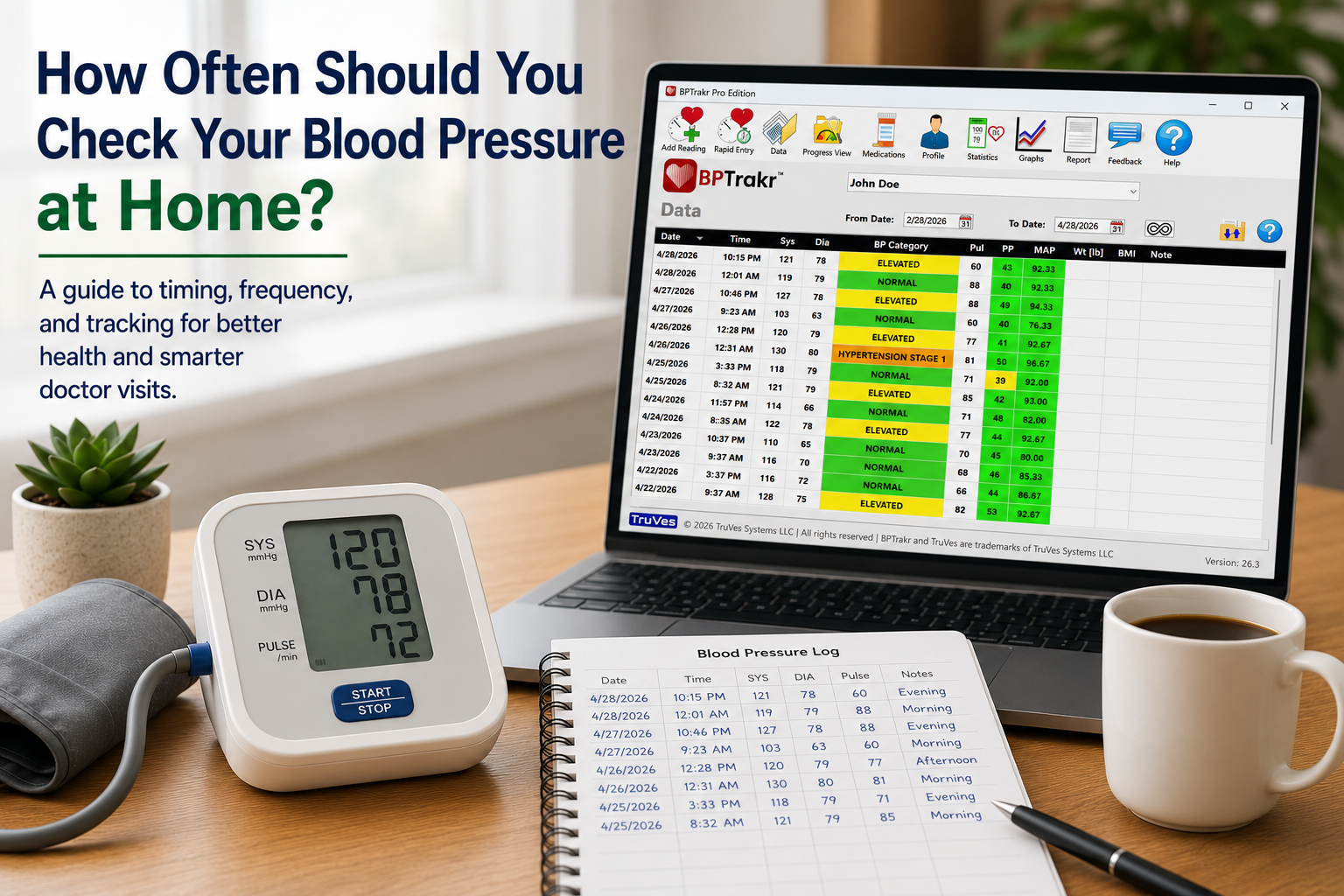
If you have high blood pressure, have been advised to monitor your cardiovascular health, or simply want to keep track of your wellness, you may wonder: How often should you check your blood pressure at home?
The answer depends on your health situation and your doctor’s recommendations. However, for most people, the key is not checking your blood pressure constantly—it’s measuring it consistently and under similar conditions so that you can identify long-term trends.
Why Regular Home Blood Pressure Monitoring Matters
A single blood pressure reading provides only a snapshot. Blood pressure naturally changes throughout the day due to activity, stress, sleep, meals, caffeine, and medications. By measuring your blood pressure at home on a regular schedule, you can build a more accurate picture of your overall cardiovascular health.
The American Heart Association recommends home blood pressure monitoring as an important tool for managing high blood pressure because it can provide a more complete picture of your cardiovascular health.
Regular home monitoring can:
- Help identify high blood pressure (hypertension).
- Reveal trends that may not be visible during occasional office visits.
- Reduce the effects of white coat hypertension, where blood pressure temporarily rises in a medical setting.
- Help evaluate how well lifestyle changes or medications are working.
General Guidelines for Checking Blood Pressure at Home
For many adults who are monitoring blood pressure, experts commonly recommend:
- Take two readings in the morning, about one minute apart.
- Take two readings in the evening, about one minute apart.
- Continue this routine for at least 3 to 7 consecutive days, or as directed by your healthcare provider.
The first day’s readings are sometimes excluded when calculating averages, since people often become more relaxed and consistent after the first day of monitoring.
If your blood pressure is stable and your doctor has not requested daily monitoring, you may only need to check it a few days each month. On the other hand, if you have recently started a new medication or are working to lower your blood pressure, your doctor may recommend more frequent measurements.
The Best Time of Day to Measure Blood Pressure
For the most consistent results, try to measure your blood pressure at the same times each day. A common schedule is:
- Morning: Before eating breakfast and before taking blood pressure medication (unless your doctor instructs otherwise).
- Evening: Before dinner or several hours after your last meal.
Avoid measuring your blood pressure immediately after exercise, consuming caffeine, smoking, or experiencing emotional stress, as these factors can temporarily raise your readings.
Tips for Getting Accurate Blood Pressure Readings
To help ensure reliable results:
- Sit quietly and rest for about five minutes before measuring.
- Keep both feet flat on the floor and avoid crossing your legs.
- Rest your arm on a table so the cuff is at heart level.
- Avoid talking during the measurement.
- Use a properly fitted upper-arm blood pressure monitor whenever possible.
Try to use the same monitor and the same arm for each measurement to make your results easier to compare over time.
Why Recording Your Blood Pressure Is Just as Important
Checking your blood pressure is only half the process. The real value comes from tracking your readings over time. A written or digital blood pressure journal allows you to identify patterns and gives your healthcare provider useful information during office visits.
In addition to systolic and diastolic pressure, many people find it helpful to record:
- Pulse (heart rate).
- Date and time of the reading.
- Body weight.
- Notes about symptoms, stress, exercise, or medication changes.
A complete history can help you and your healthcare provider understand what may be influencing changes in your blood pressure.
Keep Your Blood Pressure History Organized
Tracking your blood pressure over time can help you and your healthcare provider identify trends and evaluate treatment. BPTrakr makes it easy to record readings, monitor progress, and create printable reports for doctor appointments.
When Should You Contact Your Doctor?
Home blood pressure monitoring is an excellent tool, but it should not replace professional medical advice. If you consistently receive readings that are higher or lower than your usual range, or if you experience symptoms such as chest pain, severe headache, shortness of breath, weakness, or vision changes, contact your healthcare provider promptly.
If you receive an extremely high blood pressure reading or have concerning symptoms, seek emergency medical care immediately.
Keep a Long-Term Record of Your Blood Pressure
One of the biggest benefits of home monitoring is the ability to see trends that develop over weeks, months, or even years. A long-term blood pressure history can help you understand how diet, exercise, medications, and lifestyle changes affect your health.
BPTrakr helps you organize your home blood pressure readings, track trends, and create printable blood pressure charts and reports that you can bring to doctor appointments. If you’re looking for an easy way to maintain a long-term blood pressure history, you can download BPTrakr Free Edition and start recording your readings in just a few minutes. By maintaining a consistent record, you’ll have a clearer picture of your cardiovascular health and a useful history to share with your healthcare provider.
Final Thoughts
So, how often should you check your blood pressure at home? For most people, the answer is twice in the morning and twice in the evening for several consecutive days when monitoring is needed, then periodically as recommended by your doctor. More important than the exact schedule is measuring your blood pressure consistently and keeping a reliable record of your results.
Over time, those readings can provide valuable insights that a single office measurement simply cannot.